
Clark County Directory Starting Points
Clark County people directories do not form one master list. Their inclusion rules matter. Staff directories identify public workplace contacts. School pages name administrators and faculty. Recorded documents list parties to a transaction, while property systems connect an address or parcel with an assessment trail. Library collections reach residents who may never appear in a current online roster.
| Directory source | People included | Keeper | How to reach it |
|---|---|---|---|
| Government contacts | Departments, officials, state employees | Clark County, Vancouver, WA.gov | Free web directories |
| Education contacts | Administrators, school and college staff | VPS and Clark College | Browse or institution search |
| Property and recorded documents | Parcel owners and indexed transaction parties | Assessor, GIS, Auditor | Web portals plus lobby terminals |
| Professional and business records | Licensees, entities, agents and governors | Washington agencies | Free official lookups |
| Genealogy collections | Households, students, veterans and relatives | FVRLibraries and local repositories | Web, library card, or onsite |
| Historical city directories | Past residents, spouses and occupations | CCHM and State Library | Noncirculating or appointment access |
Begin with the directory whose purpose fits the question. A department is best for a current public contact. An address works better in the property tools. A past household may require Polk volumes, newspapers, census records, or yearbooks. The difference between a current roster and an old resident list is more than age: each was compiled from a different source and may omit a person for a different reason.
Clark County Government Contact Directories
The Clark County directory is organized around departments, elected offices, and services rather than a countywide employee-name form. Unit pages often name leaders or specialists and publish an office phone, email, and location. The Vancouver department directory works in much the same way. It routes users through departments and service areas, but research did not confirm a citywide person-name search.
The official Vancouver directory screen shows how the city presents those routes.
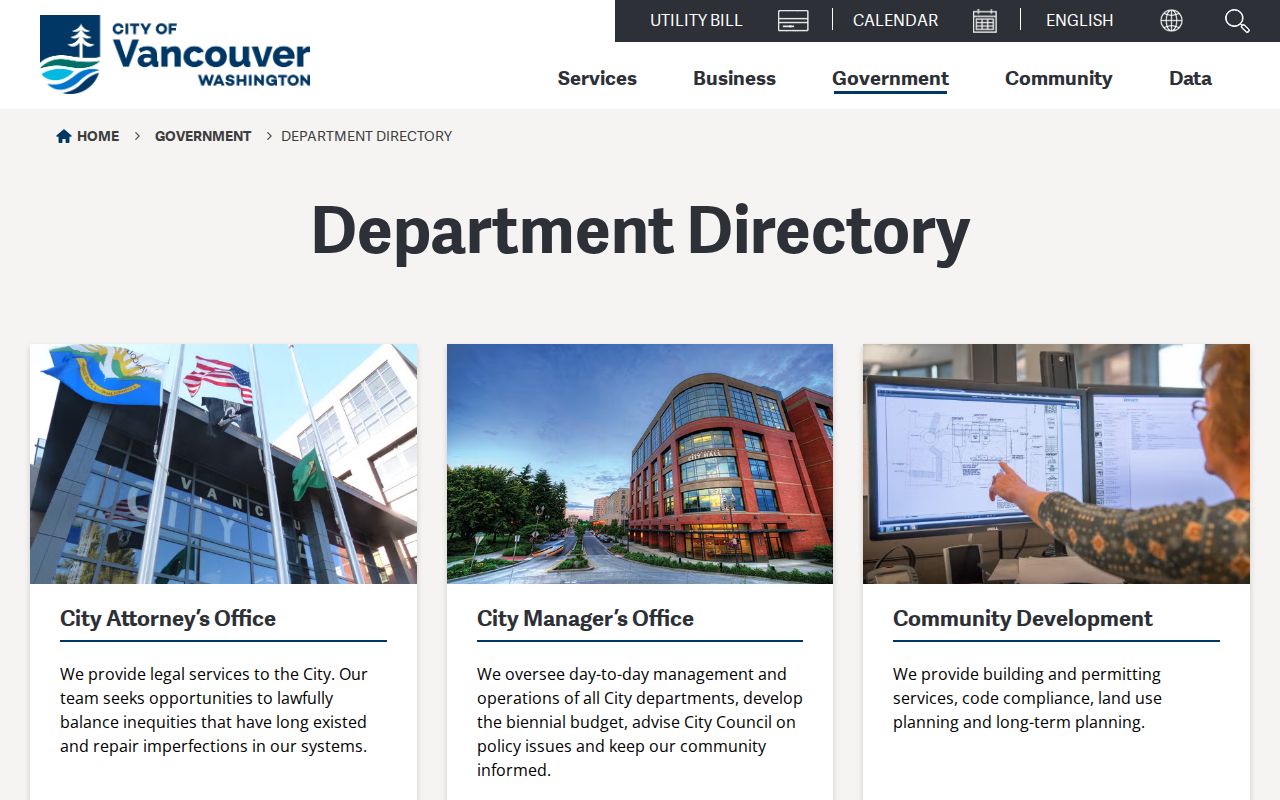
That structure makes the department name the most useful starting point. When the person is not listed, call the unit's main number or use its contact page. An identifiable existing staff roster can also be requested, subject to applicable limits, but the general access-law process belongs in the Clark County public records resource.
| Person name | Shown on leadership, specialist, or roster pages when published |
|---|---|
| Role | Job title, assignment, department, or board position |
| Contact | Work phone or official email when the agency provides it |
| Office | Agency, unit, public counter, building, or room |
| Not included | Residential addresses and personal contact details |
Washington Staff Directory Searches
Clark County residents who work for state government appear in the Washington employee contact gateway, not in the county department list. Search by employee name or agency. Results are workplace contacts. The form replaced the retired Dial.wa.gov directory, so old bookmarks may lead nowhere.
| Search field | Input | Required | Use |
|---|---|---|---|
| Last Name | Text | No | Full or partial surname |
| First Name | Text | No | Given name |
| Agency | Text | No | State agency name |
| Search | Button | Yes | Use at least a name or agency |
The current Washington gateway displays the fields that narrow a name to the correct office.
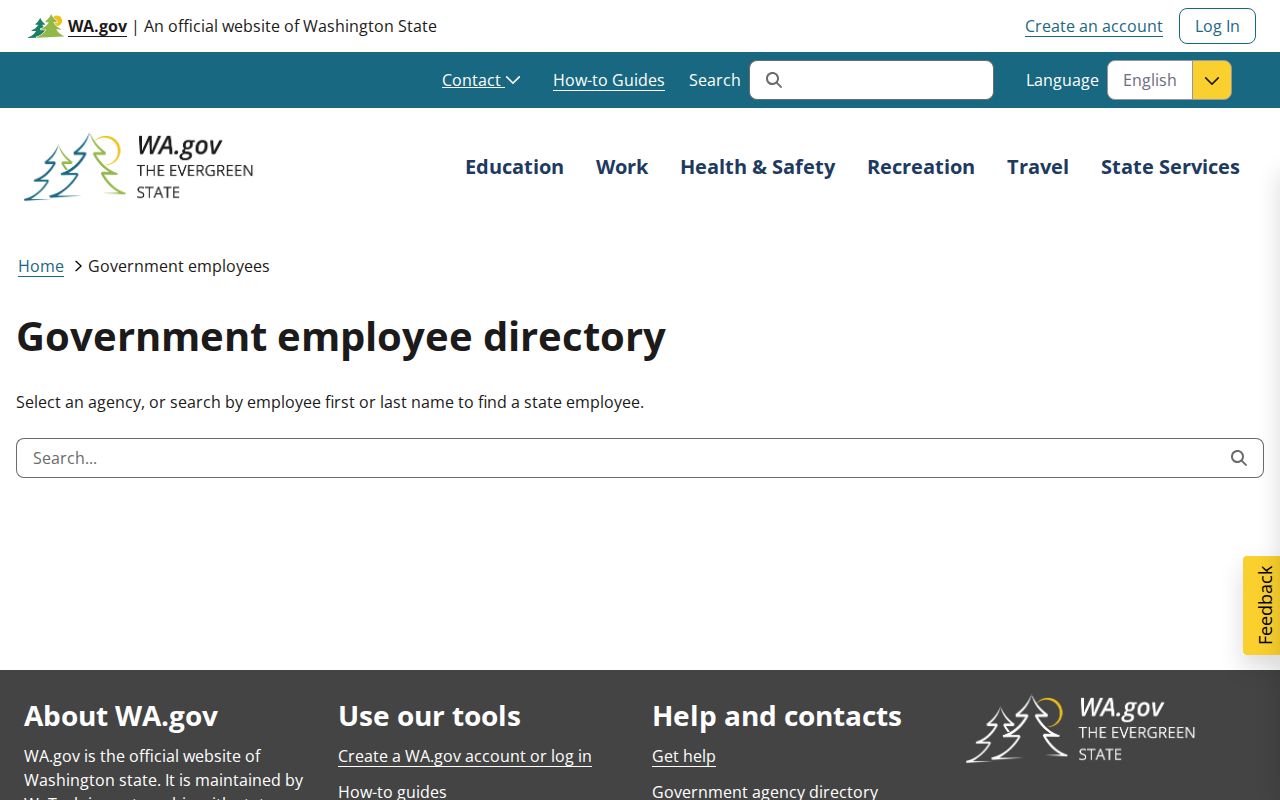
A typical official staff entry may show a name, direct work phone, office room, and one or more assignments. Agency pages remain useful when a spelling fails or several people share a name.
Clark County School Directory Routes
The Vancouver Public Schools district directory is a browse page, not a dedicated fielded name form. It organizes central departments, named administrators and specialists, and links to each elementary, middle, high, and alternative school. Individual school sites may then offer staff directories plus main, business, and attendance contacts.
The district directory image confirms the department-first route used for Clark County education contacts.
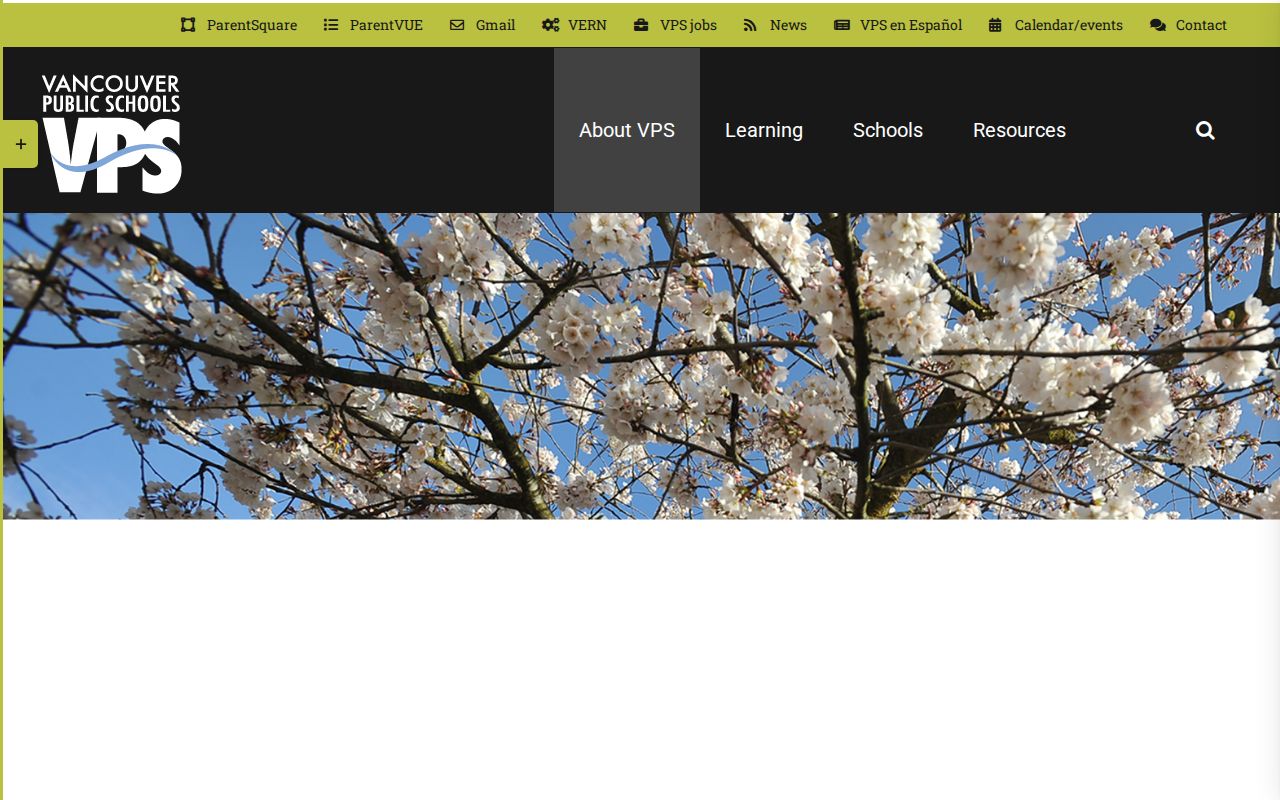
Search by school when the campus is known. If only a name is known, the district site search can locate a staff page, though spelling variants may help. The Clark College employee directory is documented in the college's official catalog, alongside quick-dial lists for major offices and campus sites. Its endpoint was unstable during research, so current search fields should not be assumed.
The captured Clark College endpoint documents the institution's official directory route.
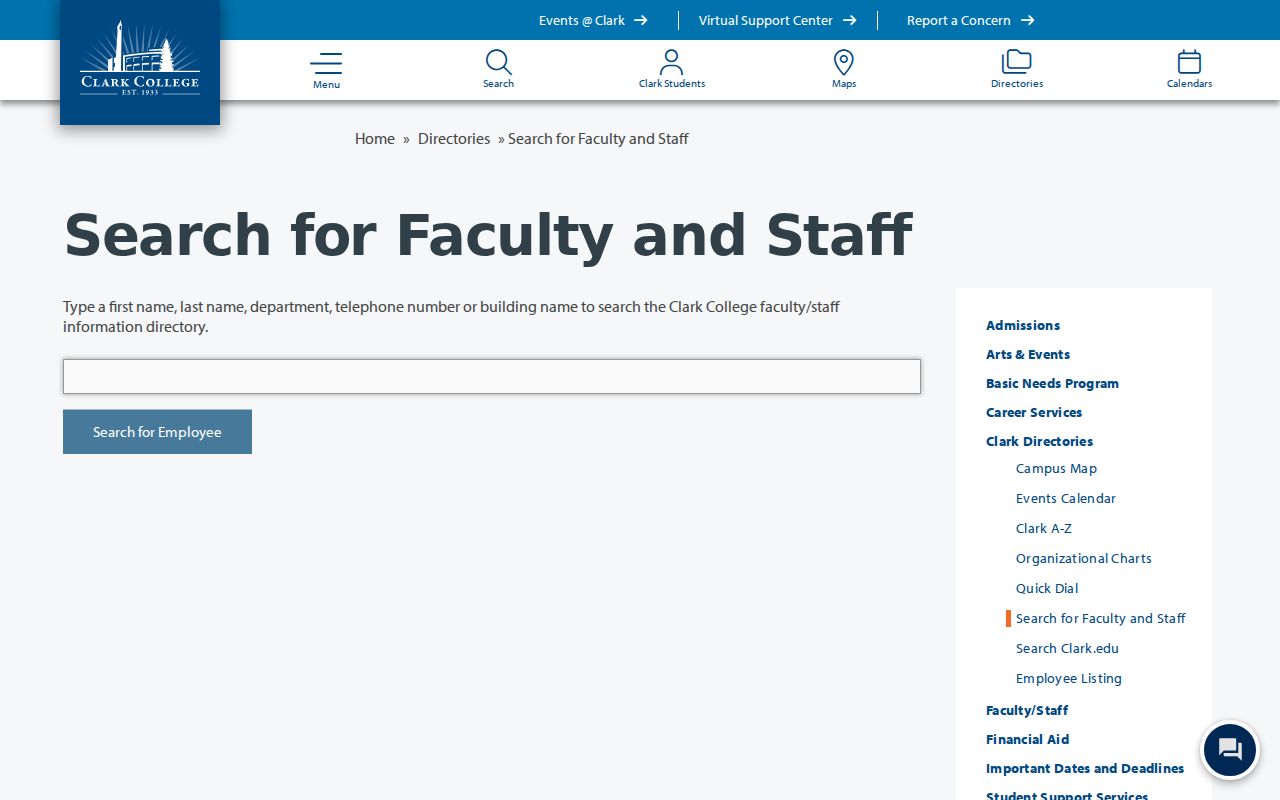
No open alumni directory was confirmed for Clark College or Washington State University Vancouver. Alumni services with privacy controls should not be treated as public people directories.
Clark County Property Owner Directories
The county's property tools act as address directories, but they have a key split. The public Property Information Center accepts a street address or nine-digit property account number. It links assessment, tax, sales, building, survey, permit, and recorded-document details. Owner-name searching is not offered on the public web form. That search is available on self-service computers in the second-floor Joint Lobby at 1300 Franklin Street.
Once a parcel is found, its Auditor Docs links can lead to deeds and other recorded instruments. Those instruments name grantors, grantees, and other indexed parties. A grantor gives or transfers an interest; a grantee receives it. Mailing addresses may belong to an escrow firm, agent, or tax-contact point, so they do not always show where a person lives.
MapsOnline adds parcel boundaries, districts, annexations, permits, and surveys. For a Vancouver postal address outside city limits, this jurisdiction check can prevent a search in the wrong municipal directory.
Clark County Name Index Directories
The Auditor's LandmarkWeb index is a transactional directory. A person appears only when a document was recorded under that name. Searches can begin with a name, document type and date, excise number, book and page, parcel ID, recording date, auditor file number, or legal description. Washington Digital Archives offers another official recorded-land name index from 1998 forward, though current transfers may be incomplete.
The voter file is also controlled data, not a casual phone book. VoteWA is a self-lookup for a voter's own registration and election details. Statewide voter-data requests route to the Secretary of State, and Washington registration does not include political-party affiliation. The purpose and limits of these directories matter as much as the names they hold.
- Index
- A finding list that points to a record; it is not always the full document.
- Parcel
- A mapped unit of land identified by a county account number.
- Reverse directory
- A list arranged by street and address rather than by surname.
- Certified copy
- An official copy authenticated by the office that keeps the record.
Clark County Professional Directories
Washington divides professional and business directories among several agencies. The Department of Licensing gateway covers its regulated professions. Health credentials use Department of Health data. Labor and Industries verifies contractors and trades. The State Bar lists lawyers and limited-license legal professionals. These sources may show a credential number, type, status, dates, location, and disciplinary information, depending on the regulator.
Business identity takes a different route. The Corporations and Charities Filing System can reveal an entity's legal name, status, registered agent, principal office, governors, and filing history. Washington Revenue records carry trade names and state business-license details. The Greater Vancouver Chamber directory lists its members and contacts, but it is not a complete list of licensed Clark County firms.
- Search a credential by name or license number when available.
- Check status and expiration dates before relying on a result.
- Use the UBI to connect state entity and business-license records.
- Treat a registered agent as a service contact, not proof of ownership or residence.
These official directories are strongest for identity checks tied to a profession, firm, or filing. Common names still need a second matching detail.
Clark County Genealogy Directory Collections
Fort Vancouver Regional Libraries genealogy resources open several routes to people who do not appear in current online directories. Ancestry Library Edition is available only inside a library and includes census, city directories, yearbooks, newspapers, military, immigration, and vital sources. HeritageQuest is available with a library card and includes census schedules from 1790 through 1950 plus thousands of family and local histories.
The FVRLibraries screen shows the mix of onsite and card-based tools available to Clark County researchers.
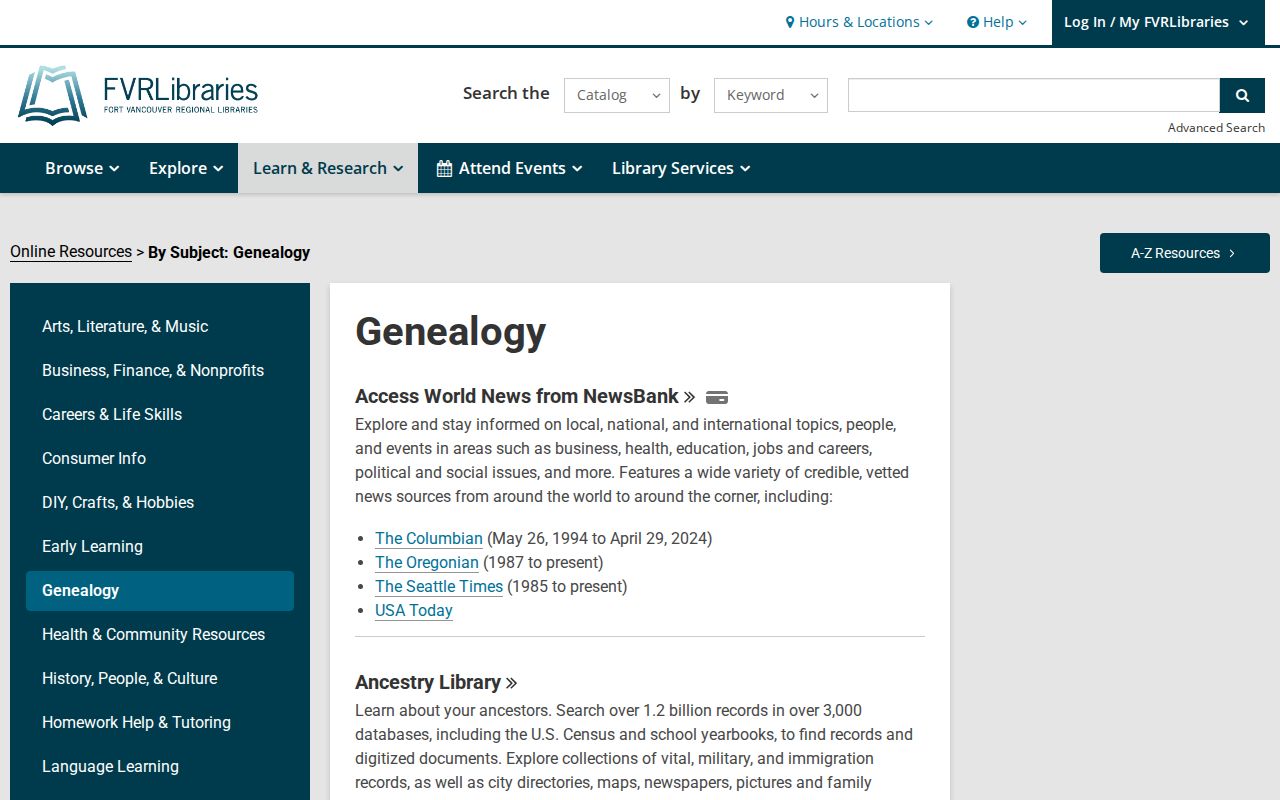
Newspaper databases add date bridges. Access World News covers The Columbian from May 26, 1994 through April 29, 2024, while ProQuest coverage begins January 1, 1995 and runs through February 3, 2024. The Clark County Genealogical Society also indexes local newspaper vital notices. Its books cover the early twentieth century through 2010, with 2011 through 2020 files searchable onsite and online death indexes covering at least 2002 through 2021.
Historical Clark County People Directories
The Clark County Historical Museum Research Library keeps noncirculating Polk directories, cemetery records, school yearbooks, maps, oral histories, home surveys, a digitized Columbian, and local history files. Staff must retrieve original photographs and maps. Researchers may use pencils, cameras, or hand scanners, which makes this one of the most practical local directory collections for reconstructing a household.
The museum's research-library description names the directory types available in Vancouver.
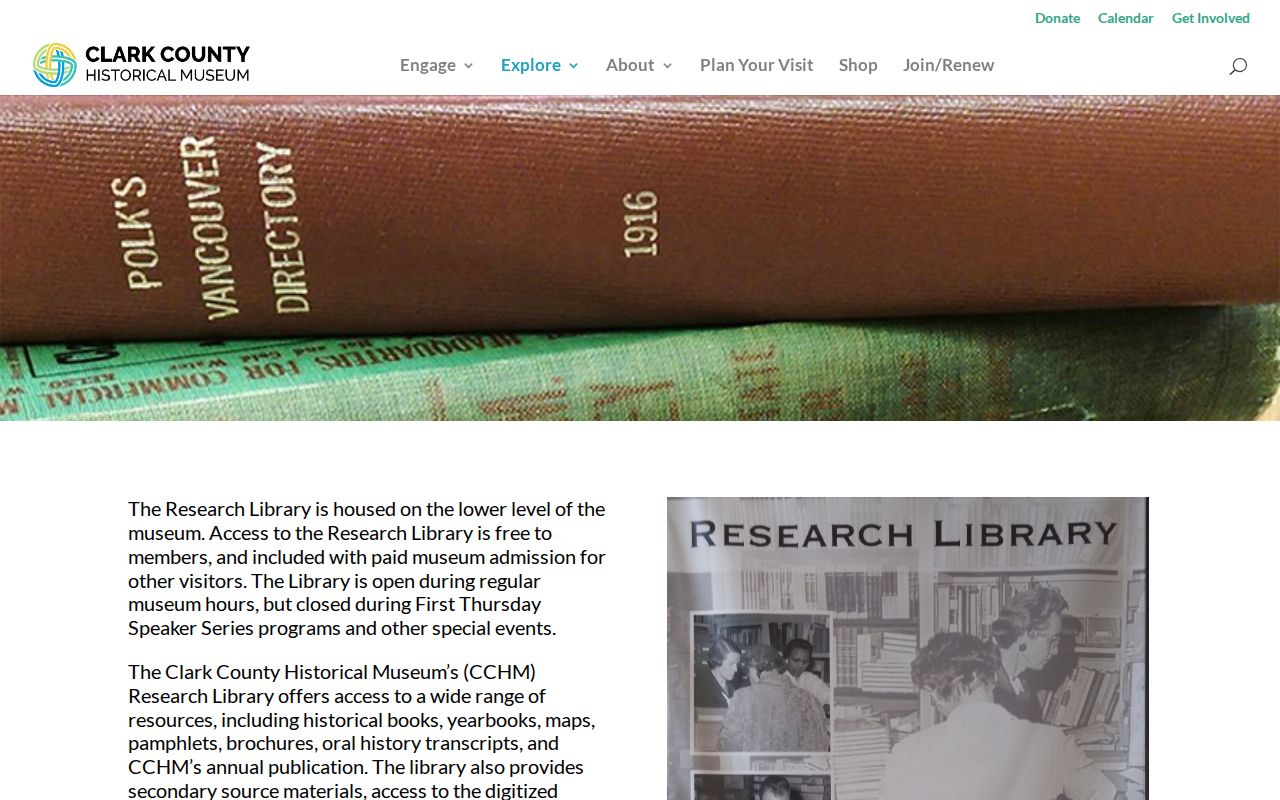
Exact continuous Polk holdings are not published online. Verified State Library Clark County directory years include 1918-19, 1921, 1928-29, 1931, and 1934. County preservation research cites additional Vancouver Polk volumes across selected years from 1904 through 1955, but those examples do not prove a complete run.
| Era | Directory trail | What it can show |
|---|---|---|
| Before 1890 | Territorial census, church, cemetery, federal land, newspapers | Substitutes for records lost in the courthouse fire |
| Early 1900s | Polk volumes, deeds, tax records, newspapers | Name, spouse, work, address, and ownership context |
| Mid-century | City directories, phone books, yearbooks, oral histories | Address and community ties |
| Digital era | Archives indexes and licensed library databases | Name searches across many record series |
When Clark County Directories Stop
The 1890 courthouse fire destroyed virtually all county records then held, so no single directory can promise a continuous pre-fire trail. Search Vancouver District, Vancouver County, Clarke County, and Clark County in archival catalogs because the jurisdiction's name changed over time. A missing result may reflect the old label rather than a missing person.
Modern gaps also need care. There is no confirmed centralized Vancouver employee-name index, no open countywide alumni list, and no public membership roll for neighborhood residents, congregations, lodges, unions, or veterans' posts. Ask the organization or its archive instead of assuming a private list is public.
For historic address work, compare adjacent directory years and then test the entry against census, deed, tax, obituary, or cemetery evidence. A reverse directory may list a tenant or occupant, while a deed names an owner. That difference is useful. Together, the two directory types can show who occupied a Clark County address and who held title at the same time.
Note: Add “WA” or “Clark County” to catalog searches so Vancouver, Washington results do not mix with Vancouver, British Columbia.